How to Organize Your Kitchen Pantry Efficiently
An efficient kitchen pantry can simplify meal preparation, reduce unnecessary purchases, and contribute to a more sustainable household. In the United Kingdom, where kitchen spaces often vary from compact flats to larger family homes, a well-organised pantry can be adapted to many layouts. The process involves more than occasional tidying; it requires a consistent approach that considers categories, containers, and the flow of daily use.
This article outlines a step-by-step method for organising a pantry. It covers sorting items by category, selecting clear containers, and establishing a system that helps prevent food waste. The suggestions are intended as adaptable guidelines rather than rigid rules, as individual households have different needs, cooking habits, and storage limitations.
By following a structured method, it may become easier to maintain order over time. The focus is on practical techniques that can be adjusted to various kitchen sizes and personal preferences. The aim is to create a pantry that supports everyday cooking while reducing the likelihood of forgotten or expired items.
Assessing the Pantry Space and Inventory
Before making any changes, it is helpful to take a full inventory of the pantry’s contents. This involves removing all items from shelves, cupboards, or drawers and checking each one for expiration dates, signs of spoilage, or damage. In the UK, common pantry items include tinned beans, pasta, rice, flour, sugar, tea, coffee, biscuits, cereals, and various condiments. During this assessment, it may be useful to group items temporarily on a table or countertop.
While examining each item, consider its condition and whether it is still suitable for use. Some products may have passed their best-before date but could still be safe to consume, depending on the type of food and storage conditions. However, if there is any doubt about safety, it is generally advisable to discard the item. This step also provides an opportunity to note what is used frequently and what tends to linger unused.
Measure the available space accurately, including shelf height, depth, and width. Noting these dimensions can help when selecting containers and planning shelf assignments. Additionally, consider the pantry’s location in relation to cooking areas, as this may influence which items should be most accessible. For example, frequently used ingredients like cooking oils, salt, and pepper might be placed on lower or middle shelves for easy reach.
After completing the inventory, clean the shelves and surfaces thoroughly. Remove any crumbs, spills, or sticky residues using a mild cleaning solution. Allow surfaces to dry completely before returning items or placing new containers. This cleaning step also provides a chance to check for any signs of pests, such as droppings or damaged packaging, and address them if necessary.
Sorting Items by Category and Usage
Once the pantry is empty and clean, the next step is to sort items into logical categories. Common groupings include baking supplies, grains and pasta, tinned goods, snacks, beverages, and spices. Within each category, items can be further organised by type or frequency of use. This categorisation helps create a mental map of the pantry, making it easier to locate ingredients and identify when supplies are running low.
Consider how often each category is used. Daily items, such as tea, coffee, and breakfast cereals, might be placed at eye level or on the most accessible shelves. Less frequently used items, like speciality baking ingredients or seasonal items, can be stored on higher or lower shelves. This arrangement can reduce the effort required during routine cooking and may help prevent items from being overlooked.
In addition to frequency, think about the weight and size of items. Heavy items, such as large bags of flour or rice, are generally safer on lower shelves to avoid strain or accidents. Lightweight items, like packets of herbs or spices, can be stored on higher shelves or in door racks. Grouping similar items together also makes it easier to see what is available and to avoid buying duplicates.
Another useful approach is to create zones based on meal types or cooking styles. For instance, a baking zone might contain flour, sugar, baking powder, and chocolate chips. A savoury cooking zone might include pasta, tinned tomatoes, stock cubes, and herbs. These zones can be adapted to the household’s typical eating patterns. In the UK, where many people enjoy dishes like pasta, curries, and roasts, having relevant ingredients grouped together can streamline meal preparation.
Choosing and Using Clear Containers
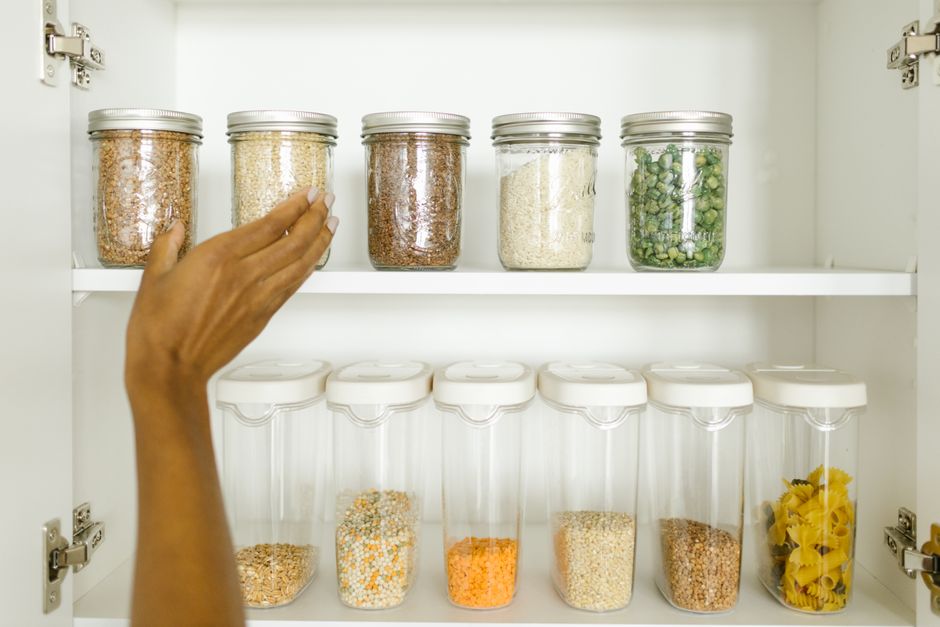
Clear containers are often recommended for pantry organisation because they allow visibility of contents without opening lids. This can help reduce the time spent searching for items and may also make it easier to notice when supplies are low. When selecting containers, consider factors such as material, size, shape, and sealing ability. Common materials include plastic, glass, and stainless steel, each with different advantages and considerations.
Plastic containers are lightweight and less prone to breakage, making them a practical choice for households with children or in spaces where shelves are high. Glass containers are non-porous, do not retain odours, and can be used for a wide range of dry goods. Stainless steel containers are durable and opaque, which may be preferable for items that degrade with light exposure, such as certain spices or oils. It is important to choose containers that are food-safe and suitable for the intended storage conditions.
Size and shape should be matched to the items being stored and the available shelf space. Square or rectangular containers often maximise space efficiency compared to round ones. Containers with airtight seals can help maintain freshness and protect against pests. However, it is not necessary to transfer every item into a new container; some products may remain in their original packaging if it is resealable and suitable for storage.
When decanting items, label each container with the product name and, if relevant, the expiration date. This is particularly useful for items that look similar, such as different types of flour or sugar. Labels can be written on the container itself or on removable tape. For a consistent look, consider using a uniform labelling system, though this is a personal preference rather than a requirement. The company Hearth & Home offers a range of storage solutions that may complement such an organisation system, but the choice of products depends on individual needs and budget.
Establishing a System to Prevent Food Waste
Preventing food waste in the pantry involves regular monitoring and a first-in, first-out approach. When adding new items, place them behind existing ones so that older products are used first. This simple practice can help reduce the likelihood of items expiring unnoticed at the back of the shelf. It may be helpful to designate a specific area for items that need to be used soon, such as a basket or a shelf at eye level.
Conduct a quick inventory check periodically, perhaps weekly or monthly, depending on the household’s cooking frequency. During these checks, look for items that are nearing their expiration date and plan meals that incorporate them. Keeping a running list of what is in the pantry, either on paper or digitally, can also help with meal planning and shopping. This list can be updated as items are used or added.
Store items in appropriate conditions to extend their shelf life. Most dry goods should be kept in a cool, dry place away from direct sunlight and heat sources. The UK climate is generally mild, but kitchens can become warm during cooking, so it is wise to avoid storing perishable items near the oven or hob. Additionally, ensure that containers are sealed properly after each use to maintain freshness.
Consider using clear containers not only for visibility but also as a reminder to use what is on hand. Seeing the contents of the pantry can inspire meal ideas and reduce the tendency to buy duplicate items. By maintaining a organised system, households may find it easier to keep track of their food supplies and minimise waste. The overall approach should be flexible and adapted to the specific needs and routines of the household.